
London Olympics bronze medallist M C Mary Kom was on Monday voted the 'Most Valuable Player' of India's campaign at the Incheon Asian Games, at a felicitation for the medal winners by the contingent sponsors, Samsung India.

'The sadhus and sanyasis of UP are not for any economics.' 'They only know the religious agenda and the RSS will support them.' 'Modi does not have full control of the party at the ground level like Indira Gandhi had.'

India's new policy commission has received a makeover and a dream team has been formed to head the Think Tank, NITI Aayog.

'The problem in Kashmir is not about pellets, bullets or tear gas.' 'It is the government's policy and intention to criminalise the protest.'

Prime Minister Modi described the DMK chief as a prolific thinker and a deep-rooted mass leader who stood for regional aspiration and national progress.
'There is a design of fundamentalists that the north east must become an Islamic country.'

We take it as a given and allow a free run to those who deserve to be reined in by a simple democratic act: vote decisively, and if the television has made a farce of itself, use the remote control, says Mahesh Vijapurkar.

'This is about demolishing all that we have stood for as a nation after Independence. This is an attack on the nation's very foundation.'
'She was once asked what the secret to political leadership was and she said it was the ability to like all kinds of people.' 'I don't think Rahul fundamentally likes people -- that's probably why he can't deal with them and it shows.' 'Sonia is a more talented political mobiliser than her son, but I think the decline of the Congress set in in 1969...'
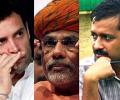
If Narendra Modi could tame his obsession with the Congress and the Nehru-Gandhi family, Arvind Kejriwal resist polishing his halo and Rahul Gandhi find his voice, we could begin a debate about the future of this country that actually addressed the seriousness of its problems, says Rahul Jacob.

What is the road ahead for Rahul Gandhi? Shehzad Poonawalla offers a blueprint.

'For the first time in 66 years, here is a leader who democratically dares to take on the establishment by raising the right kind of questions. When will the poor get justice? For how many years will the migration of the poor to cities like Mumbai continue? How long will the poor sleep on the pavements and when will all this end?'

'Every time I step on stage, I feel like I'm performing the play for the first time,' Manoj Joshi tells Sadiya Updade.

For the Congress, the Janata Dal-United has made up for the numbers in case the Samajwadi Party discontinues its support to the UPA government, reports Renu Mittal

Don't forget to make your pick for the newsmaker of 2015.

The West Bengal government wants to replace hand-pulled rickshaws with battery-operated ones. But the rickshaw pullers are apprehensive that they will lose their livelihood

'Will 'Make in India' be able to harness the demographic dividend so it does not become a disaster?' 'Will 'Digital India' live up to the lofty promises the government and private sector made as part of its recent launch?'

'Look at Mr Modi. He is a part of this new middle class.' 'India has never before seen this kind of social mobility, certainly not since medieval times.' 'As a result, India's entrenched elite, which is a class of people with a strong sense of entitlement, is being tamed,' Sanjeev Sanyal tells Shyamal Majumdar and Arup Roychoudhury.
She accused Prime Minister Narendra Modi of being 'anti-Dalit' and recalled the Una incident and the death of Dalit scholar Rohit Vemula to back her assertion.
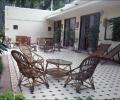
Still to recover from their electoral rout, defeated Congress members of Parliament and ministers are now faced with the heart-wrenching job of moving out of their official houses, says Rediff.com contributor Anita Katyal
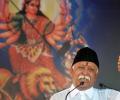
'The job of RSS is to unite the Hindu society and make it fearless, self-reliant and selfless,' says RSS chief Mohan Bhagwat

'When he first came to office, my belief is that the PM's reading of the landscape was that, with a vanquished Congress and fragmented Opposition, he was looking at least at two terms in office. This reading perhaps allows for a more cautious, gradual approach.' 'It was only a matter of time before the government was forced to come face-to-face with a serious corruption scandal. This is not a commentary on the BJP, but a statement about India's political economy.' 'There is growing concern about the government's commitment to freedom of expression, religious tolerance, and an independent civil society. Thus far, the positive movement on strategic and economic matters has crowded out these concerns, but they are lingering beneath the surface.'

'In the 30 years since the Ayodhya movement began, the RSS has created a generation of Hindus who are the mirror image of those fanatic Muslims who take to the streets at the slightest, even imagined, 'insult to Islam,' argues Jyoti Punwani.

After helping the government in policymaking since October 2014, Chief Economic Adviser Arvind Subramanian is returning to academics and will be teaching at Harvard Kennedy School on a visiting position. In an interview to Dilasha Seth and Somesh Jha, he says the ease of doing business agenda needs to move forward and India must try to integrate with the global value chains. Edited excerpts.

The note ban is Modi's make-or-break gambit for 2019. Opposition leaders see a vulnerability and won't gift pre-eminence to the Congress, says Shekhar Gupta.

Rajiv Gandhi would have turned 72 on August 20. Had he lived. On a humid night 25 years ago, the former prime minister of India was murdered in cold blood by an LTTE suicide bomber. Neena Gopal was an eyewitness to the assassination, and in this exclusive extract from her new book, The Assassination of Rajiv Gandhi, she reveals for the first time what she saw in Sriperumbudur that night.

'If the Indian economy formalises, industrialises, urbanises and develops human capital, 10 lakh youngsters will join the labour force every month in the next 10 years.' 'It's not a bulb that will go off; it is a sunrise.'
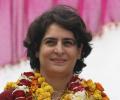
As Narendra Modi files his nomination in Varanasi, Praful Bidwai believes 'a straight contest against Priyanka would have put Modi on the defensive and forced him to concentrate on Varanasi.'

Prime Minister Manmohan Singh on Monday asked political parties to refrain from taking advantage of communal strife and said states should crack down on elements fanning such violence irrespective of their political affiliations or influence.

If India is to follow a smart cultural diplomacy, it has unmatched advantages over both China and Pakistan, says Colonel Anil A Athale (retd).

Anupam Kher on why he thinks the prime minister is a genuine person.
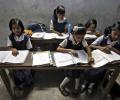
With India lagging behind on several human development indices including healthcare and education, the Union government's decision to up the spending on these sectors is a step in the right direction. However, much more needs to be done in the way of increasing accountability and arresting corruption if headway is to be made on these fronts, says Devanik Saha.
It has been said that by 2025, India could become among the top five economies in the world. If India does become a $5 trillion economy but gets all its rivers polluted, food chain poisoned and genetic pool depleted and biometric database of Indians sold or stolen at the behest of commercial czars, will it not be a pyrrhic economic victory, asks Gopal Krishna.
The government has returned to talks with Pakistan, but can it withstand pressure from a jingoistic press and a rabidly nationalistic social media.

'Temperature and wind can be predicted more easily than rainfall.' 'Rainfall, as common experience suggests, is very spotty.' 'The last bit of physics required that tells us whether it is going to rain or not is very hard.' Professor Roddam Narasimha, the eminent scientist, explains the monsoon, climate change and global warming, in a fascinating conversation with Shivanand Kanavi.

According to reports, Amit Shah has warned all of them and told them not to make controversial statements.

Gujarat was among the earliest civilisations in the sub-continent, dating back four millennia.

'The Left's decline is now a reality, both nationally and in West Bengal.'Behind it lie: Ideological rigidity and confusion, outdated party programmes... a socially conservative upper-caste leadership,' says Praful Bidwai.
If I were the BJP, I would not be celebrating quite so quickly. It can sweep its heartland in 2014, as it has shown it can do, but that heartland isn't quite big enough. And it can put up a good fight in towns and cities, too - but unless it neutralises AAP or similar political entrepreneurs, it may find itself tantalisingly short, just as has happened to it in Delhi, says Mihir Sharma.

'One big problem for the RSS is, while they spread their ideology of hard, Hindu-ised Indian nationalism, the absence of their own pantheon of modern nationalist giants. They missed out on the freedom movement quite comprehensively, in some ways comparable to the Muslim League and latter-day Communists. They have to find heroes elsewhere.' 'They borrow who they can from the Congress, like Madan Mohan Malviya and Sardar Patel, and then steal the entire lot of revolutionaries, from Bhagat Singh to Netaji, never mind that many of them were extreme leftists.'
 © 2026 Rediff.com - Advertise with us - Disclaimer - Privacy Policy - Sitemap - Feedback - About us - Terms of use - Grievances